


How to Design for Human-Centric Lighting in 2026
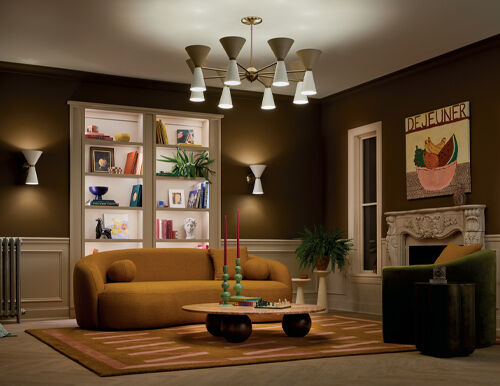
More than ever, your clients don’t just want beautiful spaces. They want spaces that help them feel better, sleep better, and live better.
That’s where human-centric lighting (HCL) comes in.
Human-centric lighting is simply this: lighting designed around people, not just rooms. It supports how we see, how we feel, and how our bodies function throughout the day.
In 2026, this idea is no longer a niche topic. It’s showing up in:
- Residential new builds
- Renovations
- Small offices
- Hospitality
- Wellness-focused interiors
If you’re an interior designer, builder, or architect, this is a major opportunity. When you understand human-centric lighting, you can offer more than a pretty fixture. You can offer a better daily experience.
What Is Human-Centric Lighting, Really?
You’ve probably heard a lot of terms:
Circadian lighting
Tunable white
Wellness lighting
Biological lighting
At the core, they all point to the same idea: Light impacts the human body. It can support our natural rhythm or fight against it.
During the day, we’re meant to get brighter, cooler light that tells our brains, “Stay alert.” In the evening, we’re meant to be around softer, warmer light that tells our brains, “Wind down.” But most people live indoors…under the wrong type of light at the wrong time of day.
Human-centric lighting is about fixing that mis-match.
It’s not about making every home a science lab. It’s about asking one simple question: “How should this space feel at different times of day, and how can the lighting support that?”
The Three Pillars of Human-Centric Lighting
To keep this simple, think about human-centric lighting as three main pillars:
Light level – how bright or dim the space is
Color of the light – warm vs cool (color temperature)
Timing of the light – when and how it changes throughout the day
If you plan for these three things, you’re already ahead of most projects.
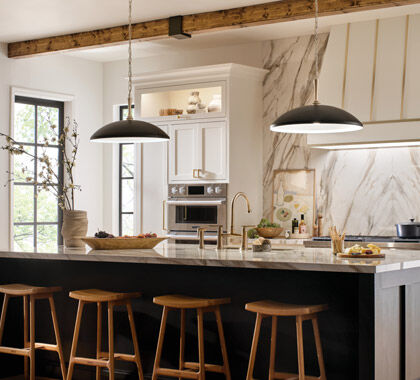
1. Light Levels: Bright Enough, But Not Too Bright
We all know what bad lighting feels like. Too dim and people are tired, squinting, or frustrated. Too bright and they feel like they’re in a big-box store.
Human-centric lighting finds the middle ground.
Daytime Goals:
- Provide enough light for focus, clarity, and productivity
- Avoid glare and harsh contrast
- Layer light so it can be adjusted for different tasks
Good Daytime Tools:
- Recessed ambient lighting
- Well-placed pendants
- Ceiling-mounted fixtures with wide distribution
- Task lighting at desks, counters, and reading areas
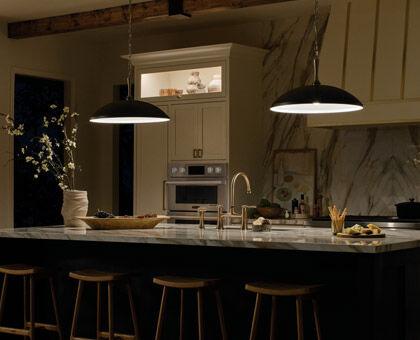
Evening Goals:
- Lower overall brightness
- Focus light where it’s needed (task + accent)
- Create pools of warm, calm light instead of flat general brightness
Good Evening Tools:
- Table lamps and floor lamps
- Dimmable wall sconces
- Under-cabinet lighting in kitchens
- Accent lights for art or shelving
Key Principle: Every important space should have at least two layers of controllable light—one for function, one for mood.
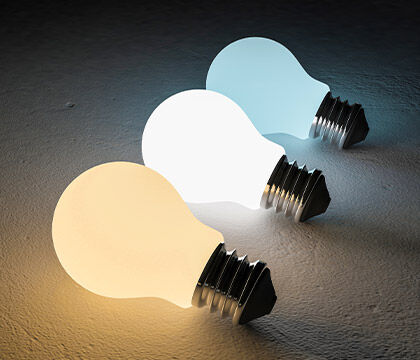
2. Color Temperature: Matching Light to the Time of Day
Color temperature is measured in Kelvin (K). You don’t have to become a lighting engineer, but you do need to know the basics.
- 2700K–3000K → Warm, cozy light (think lamp light)
- 3500K–4000K → Neutral white (bright, clean)
- 5000K+ → Cool daylight (very crisp, sometimes harsh indoors)
For human-centric lighting in homes and many commercial spaces, a simple rule works well:
- Daytime: Neutral to slightly cool (around 3500K–4000K for work areas)
- Evening: Warm (around 2700K–3000K)
If you want more control, tunable white fixtures allow you to shift color temperature throughout the day, but you don’t always need that to design well.
Sometimes, good dimming + the right color temperature is enough to get 80% of the benefit.
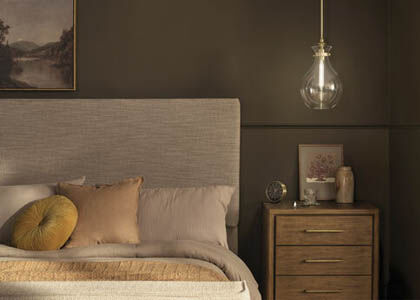
3. Timing: Light That Follows Daily Life
The third pillar is when light does what it does.
Here’s the basic pattern you want to support indoors:
- Morning: Brighter, neutral light to help people wake up and focus
- Midday: Bright, consistent light for work and activity
- Evening: Warmer, dimmer light to signal “wind down”
- Night: Very low, warm light for safe movement without waking the brain fully
Think of it like a lighting “rhythm” for the day.
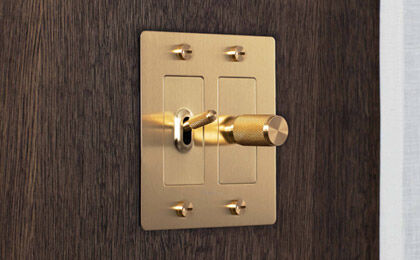
You can create this rhythm through:
- Dimmers
- Smart scenes (“Morning,” “Work,” “Evening,” “Movie”)
- Tunable fixtures, in some applications
- Layered lighting that can be switched on or off as needed
The goal is not to complicate clients’ lives. It’s to make their lighting behave more like the natural world, automatically when possible and easily when it’s manual.
Designing Human-Centric Lighting, Room by Room
Let’s get practical. Here’s how to think about human-centric lighting in the spaces your clients care about most.
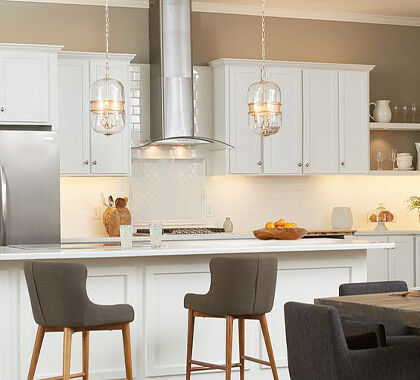
Kitchens: From Task Hub to Social Space
The kitchen works hard. It needs human-centric lighting more than almost any room.
Daytime / Task Mode:
- Brighter light over counters and islands
- Neutral white (3000K–3500K) to keep colors accurate and people alert
- Under-cabinet lighting for food prep
- Strong ambient light from recessed or surface fixtures
Evening / Relax Mode:
- Island pendants dimmed down
- Under-cabinet lights softened
- Possibly just pendants + a nearby lamp on in the adjoining room
Human-Centric Approach: Design for both cooking and connection. The same room should handle bright meal prep and late-night conversation with a glass of wine.
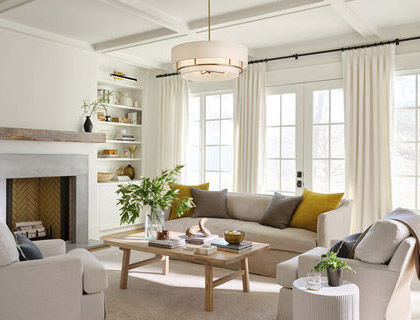
Living Rooms: Comfort, Mood, & Flexibility
Daytime:
- Enough light for reading, working on a laptop, or family activity
- Natural light + light from ceiling fixtures or floor lamps
Evening:
- Dimmable lamps and sconces
- Accent lighting on art or shelving
- Warm color temperature (2700K–3000K)
Human-Centric Approach: Give clients a “bright mode” and a “cozy mode.” If they only have an overhead fixture, they’re stuck. Help them layer.
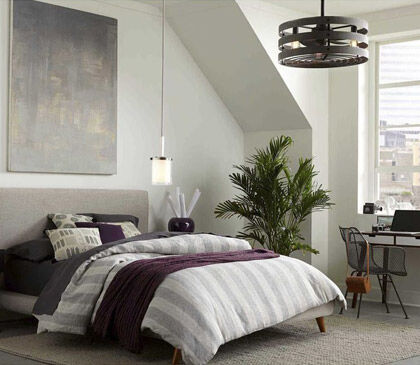
Bedrooms: Sleep-Friendly Lighting
If there’s one room where human-centric lighting really shows its value, it’s the bedroom.
Goals:
- Calm the nervous system in the evening
- Avoid wake-up signals late at night
- Keep nighttime navigation safe without harsh light
Best Practices:
- Use warm color temperature lamps and sconces (2700K)
- Add dimmers wherever possible
- Avoid bright, cool overhead lights late in the day
- Consider small night lights or low-level path lights for nighttime movement
Human-Centric Approach: Ask: “What does this room’s lighting do to their sleep?” Design from there.
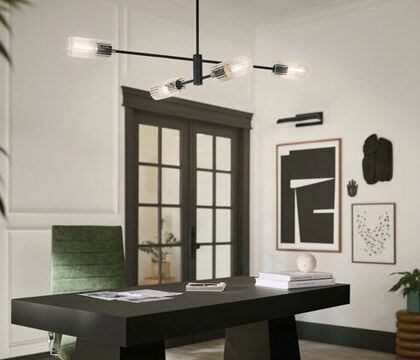
Home Offices: Focus Without Fatigue
With more people working from home, home offices deserve thoughtful lighting.
Needs:
- Clear visibility for tasks
- Reduced glare on screens
- Balanced light across the room
Best Practices:
- 3500K–4000K neutral white light during the workday
- Task lighting at the desk
- Ambient light to balance the room (not just a single overhead)
- Dimming or warmer scenes after hours if the room doubles as a guest room or den
Human-Centric Approach: Plan lighting like you’re designing for a small commercial office, but with the comfort of home.
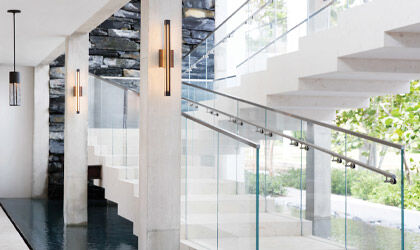
Commercial & Hospitality Spaces
In commercial projects—offices, small healthcare spaces, boutique hotels—the same ideas apply:
- Daytime: brighter, cooler, even light for productivity
- Evening: warmer, softer light for relaxation or hospitality
- Controls: scenes and zones help staff manage the feel of the space quickly
Human-centric lighting becomes a way to support branding, productivity, and guest experience, all at once.
Simple Steps to Start Designing Human-Centric Lighting Today
You don’t have to overhaul everything to start using this approach. Start with small, simple steps:
- Ask better questions.
“How do you want to feel in this room at 8am? At 8pm?” - Plan for at least two layers of light in key rooms.
A room lit by only one overhead fixture is almost never truly human-centric. - Choose color temperatures on purpose.
Don’t let “whatever’s in stock” decide. Pick warm for rest, neutral for work. - Use dimming as a standard, not an upgrade.
Dimmers are a simple way to support circadian-friendly lighting. - Offer human-centric lighting as a service, not just a feature.
When you explain how lighting supports mood, focus, and sleep, clients see your value rise.
Human-Centric Lighting Is Like Conducting an Orchestra
Think of a home or building as an orchestra.
The fixtures are the instruments. The natural light is the string section. The dimmers and controls are the conductor’s hands.
Without direction, you get random noise: harsh light here, dark corners there, glare where no one wants it.
With a little planning, you get harmony. Every light plays its part, at the right time, for the right reason.
That’s what human-centric lighting does—it turns random light into a well-orchestrated experience.
Frequently Asked Questions
Q: Do I need special “circadian” fixtures to design human-centric lighting?
A: Not always. Good layering, color temperature choices, and dimming can go a long way. Tunable white fixtures add flexibility but aren’t always required.
Q: Is human-centric lighting only for high-end projects?
A: No. The core ideas—warmer evenings, layered lighting, dimming—work in almost any budget. You can scale up or down based on the client.
Q: What color temperature is best for bedrooms?
A: Warm light, around 2700K, is ideal for evening and pre-sleep use.
Q: Can human-centric lighting help with productivity?
A: Yes. Brighter, neutral or slightly cool light during work hours helps people focus and stay alert.
Q: Does every room need tunable white fixtures?
A: No. It can be helpful in offices, living rooms, or multipurpose spaces, but many rooms can be handled with standard LED color temperatures and dimmers.
Q: How is human-centric lighting different from “good lighting design”?
A: They overlap a lot. Human-centric lighting puts extra attention on how light affects health, mood, and daily rhythm—not just how a room looks.
Q: Are smart lighting systems necessary for human-centric design?
A: They’re helpful, but not required. Smart systems can automate changes throughout the day, but you can still design excellent human-centric lighting with standard controls.
Q: Is this only for residential projects?
A: No. Offices, hospitality, healthcare, and education all benefit from lighting that supports people’s well-being and performance.
Q: How do I explain this to clients without sounding too technical?
A: Keep it simple: “We’ll use brighter, neutral light when you need to focus, and softer, warmer light when you need to relax. We’ll design your lighting to support how you live, not fight against it.”
Q: Where should I start if I want to try this on just one project?
A: Start with a bedroom, living room, or home office. Focus on layering lights, choosing the right color temperatures, and adding dimmers. You’ll see the impact right away.


Need Help Bringing Human-Centric Lighting Into Your Next Project?
You don’t have to figure this out alone.
If you’re ready to design spaces that look beautiful and feel better to live and work in, the professionals at Lighting New York are here to help.
Our LNY Pro team can:
Recommend the right fixtures and color temperatures
Help you layer light for function and mood
Suggest dimming and control strategies
Support both residential and commercial wellness-focused projects
Contact Lighting New York today to get expert guidance on human-centric lighting for your next design.
Let’s create spaces that don’t just look good in photos—but feel amazing in real life.
Call 866-344-3875 today!