


How to Create Better Lighting Specs & Avoid the Top 10 Errors Pros Made in 2025

Every designer, builder, and architect has lived this moment:
The fixtures are ordered. The electrician is scheduled. And suddenly… something’s wrong.
The fixture is too big. The finish doesn’t match. The light is too harsh. The dimmer doesn’t work. The lead time just doubled.
Lighting mistakes don’t just slow projects down—they cost real money, damage trust with clients, and create unnecessary stress. The good news? Most of these problems are completely avoidable.
In 2026, the Pros who win aren’t the ones who spec the flashiest fixtures. They’re the ones who spec clearly, accurately, and strategically.
Think of a lighting spec like a blueprint for success. If one line is unclear, the entire project can wobble. But when the plan is clean and intentional, everything runs smoother—from ordering to installation to final walkthrough.
This guide shows you how to create better lighting specs and avoid the top 10 mistakes Pros made in 2025, so you can save time, reduce rework, and deliver better outcomes for your clients.
What Makes a “Good” Lighting Spec in 2026?
A strong lighting spec does three things well:
1. It removes ambiguity
2. It anticipates problems before they happen
3. It communicates clearly to everyone involved
A good spec isn’t about showing off design knowledge. It’s about making sure the right product shows up, works correctly, and looks exactly how the client expects.
Now let’s talk about what went wrong in 2025—and how to fix it.
The Top 10 Lighting Spec Errors Pros Made in 2025 (& How to Avoid Them)
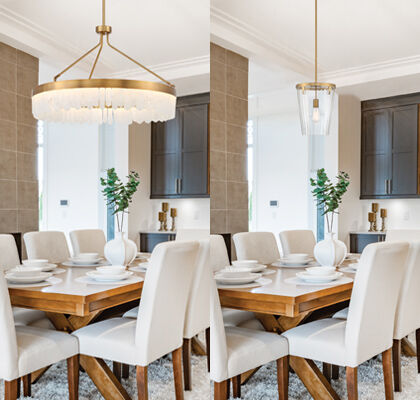
Mistake #1: Not Confirming Fixture Scale
This was the number-one issue across residential and light commercial projects. Fixtures that were:
- Too small for the space
- Too large for the ceiling height
- Visually overwhelming once installed
Why It Happens: Specs often rely on catalog photos instead of real dimensions and room context.
How to Fix It:
- Always review fixture width, height, and depth
- Compare fixture size to:
- Room dimensions
- Ceiling height
- Table or island size
Rule of Thumb: If you’re unsure, mock it up visually or go one size larger for statement areas and one size smaller for functional spaces.
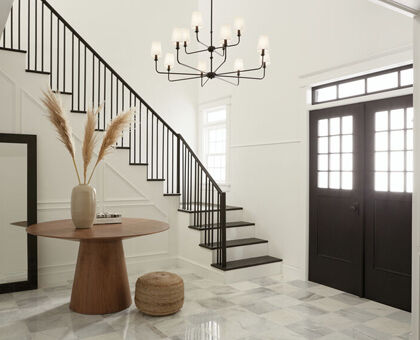
Mistake #2: Ignoring Ceiling Height in the Spec
A fixture that looks perfect in a catalog can feel completely wrong in a space with low ceilings.
Common Issues:
- Chandeliers hanging too low
- Pendants blocking sightlines
- Flush mounts that feel bulky
How to Fix It: Include ceiling height directly in your spec notes and select fixtures accordingly.
Quick Standards:
- 8 ft. ceiling → low-profile fixtures
- 9 ft. ceiling → moderate pendants and chandeliers
- 10+ ft. ceilings → layered or oversized fixtures work best
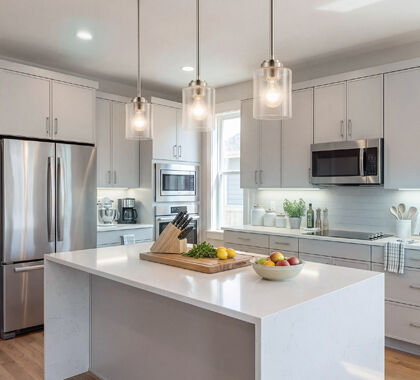
Mistake #3: Mixing Color Temperatures Unintentionally
Nothing makes a space feel “off” faster than mismatched light color.
What Went Wrong in 2025:
- Warm pendants paired with cool recessed lights
- Neutral under-cabinet lights clashing with warm ambient light
- Replacement bulbs not matching original specs
How to Fix It: Specify color temperature every single time.
Best Practice:
- Most homes: 2700K–3000K
- Kitchens and offices: 3000K–3500K
- Outdoor: 2700K–3000K
Never assume. Always state it.

Mistake #4: Forgetting to Specify Dimming Compatibility
A beautiful light that doesn’t dim properly is one of the most frustrating outcomes for clients.
Why This Happens:
- LED fixtures paired with incompatible dimmers
- No dimmer listed in the spec
- Electrician installs “standard” dimmer
How to Fix It: Your spec should include fixture model, lamp or LED type, and recommended dimmer model.
This single step prevents callbacks, flickering complaints, and unhappy clients.
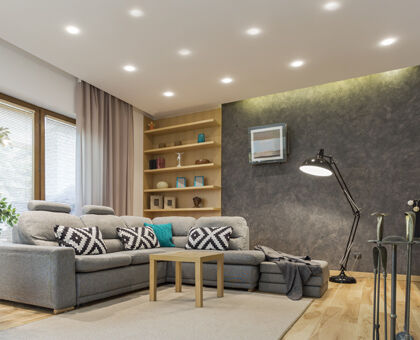
Mistake #5: Over-Specifying Recessed Lighting
In 2025, many projects suffered from “can overload.” Too many recessed lights can:
- Flatten a room
- Create glare
- Remove visual warmth
How to Fix It: Use recessed lighting for support, not dominance.
Better Strategy:
- Recessed for ambient base
- Pendants, sconces, and lamps for personality
- Accent lighting for depth
Fewer, well-placed lights beat many poorly placed ones.

Mistake #6: Not Accounting for Lead Times Early Enough
This mistake caused more delays and substitutions than almost any other.
What Went Wrong:
- Fixtures spec’d without checking availability
- Clients approving lights that were backordered
- Last-minute substitutions under pressure
How to Fix It: Before finalizing a spec, confirm stock status, review lead times, and identify at least one backup option.
LNY Pro does this every day—and flags issues before they become problems.
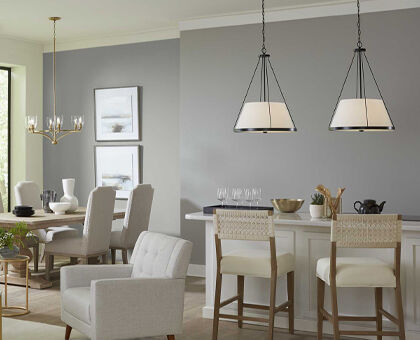
Mistake #7: Incomplete Finish Coordination
Lighting finishes must work together—even across brands.
Common Problems:
- Brass that doesn’t match brass
- Black that looks gray next to true black
- Mixed metals that weren’t intentional
How to Fix It:
- Use finish families (warm brass, soft black, brushed nickel)
- Match undertones, not just names
- Ask for finish samples or photos when possible
Intentional mixing looks designer-driven. Accidental mixing looks messy.

Mistake #8: Forgetting Installation Details
Some fixtures require:
- Special junction boxes
- Structural support
- Remote drivers
- Larger canopies
Why This Matters: If these details aren’t included in the spec, installers are left guessing—or worse, improvising.
How to Fix It: Add simple install notes including mounting requirements, weight considerations, driver location, and access needs.
Clear specs = smoother installs.

Mistake #9: Not Planning for Maintenance
A fixture that looks great but is impossible to service becomes a long-term headache.
Examples:
- Integrated LEDs in hard-to-reach ceilings
- Specialty bulbs that are difficult to replace
- Fixtures requiring full removal for service
How to Fix It: Ask one question, “How will this be maintained in five years?” Sometimes the smarter spec is the simpler one.

Mistake #10: Treating the Spec as “Done” Too Early
Lighting specs should evolve as projects evolve.
What Happened in 2025:
- Specs locked before final layouts
- Furniture changes not reflected
- Ceiling changes ignored
How to Fix It: Review lighting specs at key milestones including after layout changes after ceiling plans finalize, and before ordering.
A spec is a living document—not a one-time task.
How to Build a Better Lighting Spec in 2026 (Simple Checklist)
A strong lighting spec should include:
When all of this is in place, errors drop dramatically.
Lighting Specs Are Like Recipes
Frequently Asked Questions
Q: How detailed should a lighting spec be?
A: Detailed enough that an installer can execute without guessing.
Q: Do I need to include color temperature every time?
A: Yes. Always.
Q: Should I include lead times in the spec?
A: Absolutely. It helps set expectations.
Q: How do I prevent dimming issues?
A: Specify compatible dimmers and LED types.
Q: Is it okay to mix brands in one room?
A: Yes—if finishes and scale are coordinated intentionally.
Q: What’s the biggest spec mistake to avoid?
A: Not checking availability before approval.
Q: Should outdoor lighting be spec’d differently?
A: Yes—include IP ratings, materials, and environmental exposure.
Q: Do I need backup fixtures?
A: For key fixtures, always yes.
Q: How often should specs be reviewed?
A: At every major design or construction milestone.
Q: Can LNY Pro help review lighting specs?
A: Lorem Ipsum


Want Fewer Mistakes and Smoother Lighting Projects in 2026?
Review and refine lighting specs
Identify issues before ordering
Confirm availability and lead times
Recommend substitutions
Match finishes across brands
Reduce returns and cancellations
Contact LNY Pro today for expert support on your lighting specs and project planning.
Let’s make your 2026 projects smoother, smarter, and stress-free.
Call 866-344-3875 today!